
Views: 0
Airbus A321XLR: The Technology Behind Long-Range Narrowbody Flight
How Airbus transformed a single-aisle passenger aircraft into a long-range jet capable of connecting continents.
The Airbus A321XLR represents a major advancement in commercial aviation. Designed to fly routes traditionally associated with larger widebody aircraft, the A321XLR combines modern engines, additional fuel capacity, improved structural engineering, and aerodynamic efficiency.
With a maximum advertised range of 4,700 nautical miles (8,700 kilometres) and flight capability of approximately 11 hours, it allows airlines to operate thinner long-distance routes without the passenger capacity or operating economics of a larger twin-aisle aircraft. Airbus+1
Airbus A321XLR: Technical specifications
Maximum range
4,700 NM
Flight endurance
Up to 11 hours
Maximum passengers
244
Typical two-class capacity
180–220
Maximum takeoff weight
101.5 tonnes
Rear centre tank
12,900 litres
Aircraft length
44.51 m
Wingspan
35.80 m
Airbus published specifications; actual achievable range depends on payload, winds, reserves, and operating conditions. Airbus+1
1. The rear centre tank: The heart of the A321XLR
A 321 von Airbus: Zehn Stunden im neuen Kurzstreckenjet | FAZ
The most important engineering breakthrough is the Rear Centre Tank (RCT), a permanently integrated fuel tank inside the aircraft’s lower fuselage.
Earlier long-range A321 variants used additional centre tanks installed in the cargo compartment. The A321XLR’s integrated design increases fuel capacity while preserving more space for luggage and cargo.
The RCT incorporates approximately 12,900 litres of fuel capacity and sits behind the main landing gear bay. Unlike removable additional tanks, it forms part of the aircraft’s primary fuselage structure. Airbus+1
This approach delivers three crucial advantages:
- Greater fuel capacity for long-distance operations.
- Better use of available lower-fuselage space.
- More practical baggage and cargo capacity for long-haul routes.
2. New-generation turbofan engines
The A321XLR uses advanced high-bypass turbofan technology, with engine options from the CFM LEAP-1A and Pratt & Whitney GTF families.
These engines improve fuel efficiency through advanced aerodynamic designs, modern materials, and more efficient engine architectures.
The LEAP engine uses advanced materials and high-efficiency compressor and turbine technologies. The geared turbofan takes a different approach, using a reduction gearbox to allow the fan and low-pressure turbine to operate at more suitable rotational speeds.
Together with aerodynamic and structural improvements, this engine efficiency helps make long-distance narrowbody operations commercially practical.
3. Aerodynamics and efficient wing design
Airbus Expects Slower 20-Year Growth, But More Aircraft Deliveries | Aviation Week
Range is not simply about carrying more fuel. The aircraft must also minimise aerodynamic drag.
The A321XLR benefits from the A320neo family’s aerodynamic developments, particularly its distinctive Sharklet wingtip devices, which reduce the strength of wingtip vortices and associated induced drag.
Airbus also introduced wing enhancements to improve low-speed performance, supporting the increased maximum takeoff weight. Airbus+1
Over several hours of flight, relatively small efficiency improvements can produce substantial operational benefits.
4. Reinforced structure and landing gear
Adding fuel increases takeoff weight and therefore changes the structural and landing loads that the aircraft must withstand.
The A321XLR has a maximum takeoff weight of up to 101.5 tonnes, compared with approximately 97 tonnes for the earlier A321LR.
To accommodate these higher loads, Airbus strengthened the landing gear and introduced structural changes around the fuel tank and lower fuselage.
The A321XLR also includes a larger reinforced belly fairing with protective features designed to address emergency landing conditions. Airbus+1
5. Fuel-tank safety and certification
The RCT required more than conventional aircraft certification testing because it introduced a new structural fuel-storage arrangement.
The European Union Aviation Safety Agency (EASA) developed additional certification conditions to address the tank’s particular safety characteristics, including fire-related hazards.
Airbus used protective materials, reinforced structural components, and specific safety engineering measures to meet the certification requirements.
The CFM-powered A321XLR received EASA type certification on 19 July 2024, marking a major milestone after more than five years of certification work. EASA+1
6. Long-haul passenger comfort in a narrowbody cabin
Long-range capability must be accompanied by a cabin suitable for flights lasting up to 11 hours.
The A321XLR incorporates Airbus’s Airspace cabin features, including larger overhead bins, modern lighting, inflight entertainment, connectivity, and the option of fully flat business-class seats.
Cabin arrangements vary by airline. Iberia’s first A321XLR, for example, entered service with 182 seats across business and economy classes. Airbus+1
7. How the A321XLR compares with other A321 variants
| Specification | A321neo | A321LR | A321XLR |
|---|---|---|---|
| Maximum range | ~4,000 NM* | 4,000 NM | 4,700 NM |
| Long-range fuel arrangement | Optional ACTs | Multiple ACTs | Integrated RCT |
| Maximum takeoff weight | Up to ~97 t | 97 t | 101.5 t |
| Main mission | Short/medium haul | Extended routes | Long-haul routes |
*A321neo range depends on configuration; the approximately 4,000 NM figure represents an enhanced-range configuration. Figures are manufacturer reference capabilities, not guaranteed route performance. mediaassets.airbus.com+1
8. Entering commercial service
File:Iberia Airbus A321XLR EC-OIL on final approach to Boston March 2025 2.jpg – Wikimedia Commons
The A321XLR achieved several important programme milestones.
- 15 June 2022: First A321XLR test flight.
- 19 July 2024: EASA certification of the CFM LEAP-powered version.
- 30 October 2024: First aircraft delivered to Iberia.
- 14 November 2024: Iberia launched its first commercial transatlantic A321XLR service between Madrid and Boston.
- 21 February 2025: The Pratt & Whitney GTF-powered version received EASA type certification.
Airbus+2
9. Why the A321XLR matters to the future of aviation
Historically, airlines often needed widebody aircraft for longer international routes. Such aircraft offer substantial capacity but may be difficult to fill profitably on routes with limited passenger demand.
The A321XLR provides a different operating model: smaller aircraft, longer range, and more opportunities for nonstop connections between cities.
This creates possibilities for new point-to-point services, more frequent flights, and seasonal routes that might not support a larger aircraft.
There are trade-offs. Narrowbody cabins offer less movement space than widebody layouts, and cargo capacity, passenger payload, headwinds, and required fuel reserves can constrain the aircraft’s actual range.
Nevertheless, the A321XLR represents a significant advance in combining the economics of a single-aisle aircraft with genuine intercontinental capability.
Conclusion
The Airbus A321XLR’s achievement comes from combining several technologies rather than relying on one revolutionary component. Its integrated fuel tank, efficient engines, aerodynamic refinement, reinforced structure, and long-haul cabin collectively enable new types of commercial operations.
It is an aircraft designed not merely to fly farther, but to make more nonstop routes economically viable.
SEO package — Bin3aiah Planes
SEO title
Airbus A321XLR: Technology, Range, Engines & Design
URL slug
airbus-a321xlr-long-range-technology
Meta description
Discover how the Airbus A321XLR achieves 4,700 nautical miles of range through its innovative fuel tank, efficient engines, aerodynamics and design.
Focus keyword
Airbus A321XLR technology
Secondary keywords
A321XLR range, Airbus A321XLR engines, rear centre tank, narrowbody long-haul aircraft, A321XLR specifications, Airbus aviation engineering
Tags
Airbus, A321XLR, Aviation Technology, Aircraft Engineering, Commercial Aviation, Long-Range Aircraft, Narrowbody Aircraft, Jet Engines, Aircraft Design, Aviation Innovation
Suggested image alt text
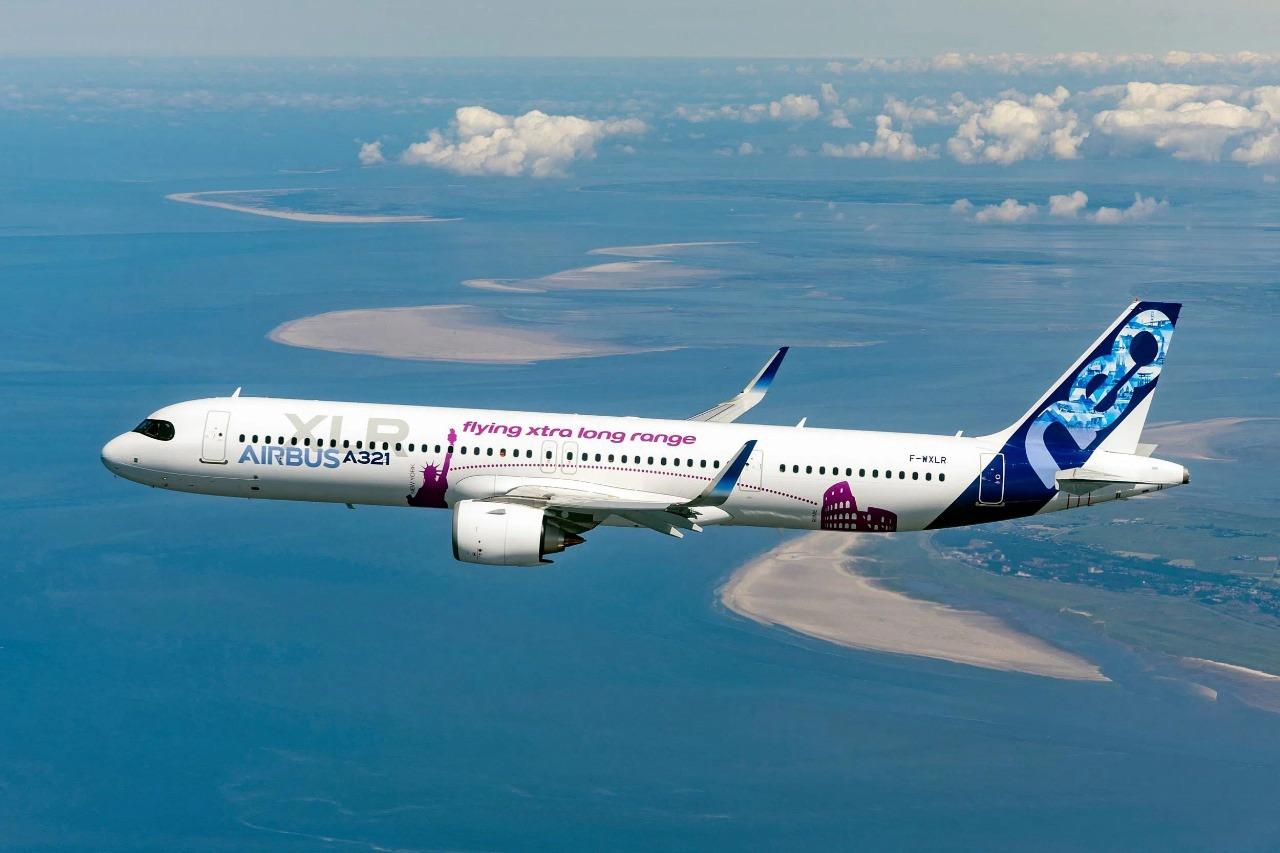
Airbus A321XLR long-range narrowbody passenger aircraft in flight, featuring efficient turbofan engines and Sharklet wingtips.
Official references
- Airbus — A321XLR specifications
- Airbus — A321XLR engineering and certification
- EASA — A321XLR safety certification
Recommended article category: Commercial Aircraft / Aircraft Technology. The article and SEO fields are ready for WordPress; they have not been published.