
Views: 11
Boeing 777X: New Wings, Engines and Cabin Engineering
Aviation Technology | Aircraft Engineering | Boeing 777X
Boeing 777-9 Certification Progresses with Clearance for Next Phase – Air Data News
First look: Inside Boeing’s first prototype 777X at Dubai Airshow – The Points Guy
10
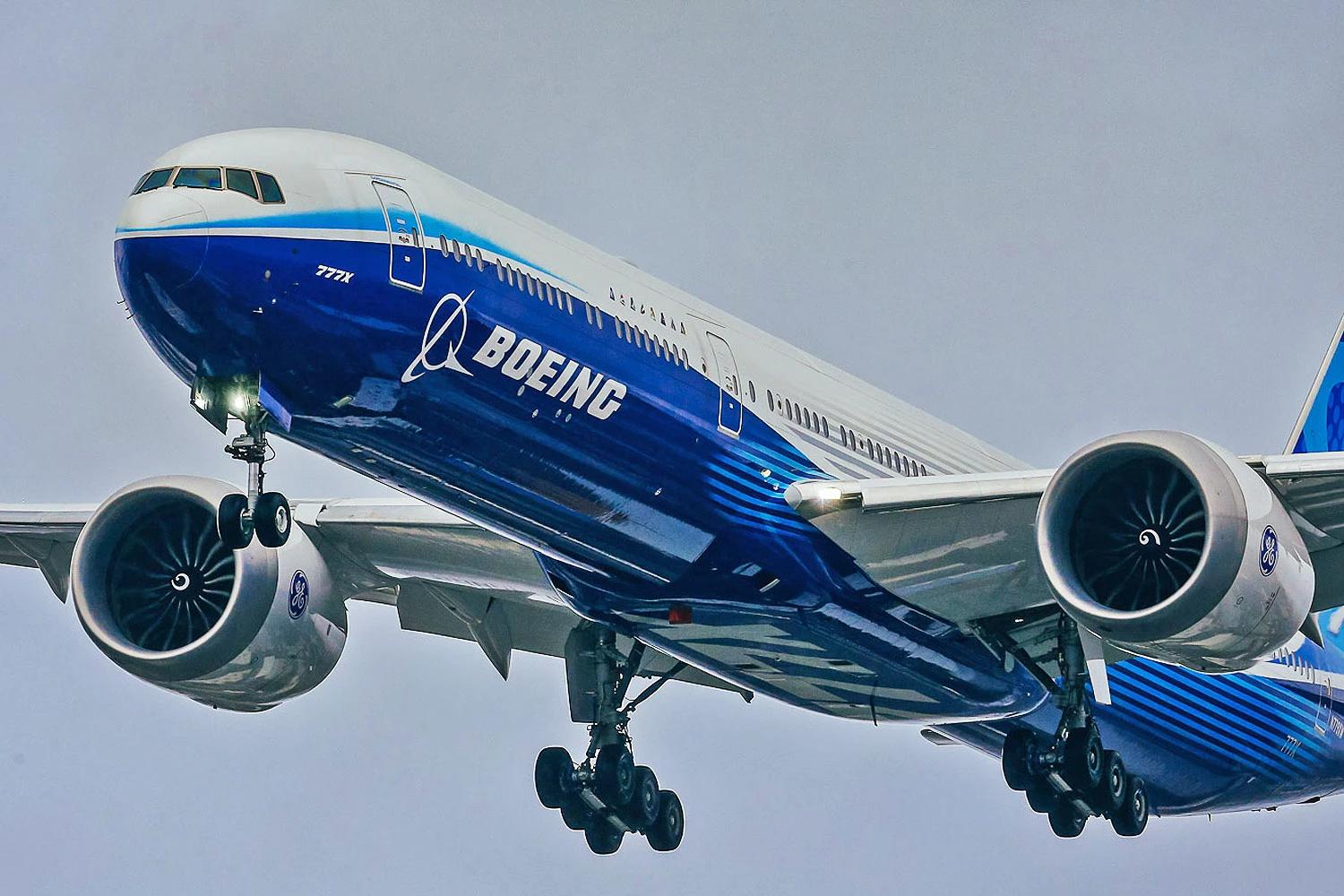
The Boeing 777X represents one of the most ambitious developments in modern commercial aviation. Building on the successful Boeing 777 family, it introduces advanced composite wings, folding wingtips, powerful GE9X engines, and redesigned passenger cabins.
Designed for long-distance international travel, the 777X combines the size and capacity of a large widebody aircraft with technologies intended to improve fuel efficiency, operating economics, and passenger comfort.
Its engineering innovations make it particularly interesting because they address three major challenges simultaneously: aerodynamic performance, airport compatibility, and the experience of passengers travelling thousands of kilometres.
1. Advanced Composite Wings: A New Aerodynamic Design
Why The Boeing 777X Is Worth Waiting And Waiting And Waiting For
One of the most significant innovations on the Boeing 777X is its new carbon-fibre-reinforced composite wing.
Unlike the predominantly aluminium wings of earlier 777 aircraft, the 777X uses advanced composite materials in its main wing structure.
These materials allow engineers to design longer, more aerodynamically efficient wings while carefully controlling structural weight.
The extended wingspan measures approximately 71.8 metres (235 feet).
The advantages include improved lift-to-drag performance, reduced aerodynamic drag, greater structural design flexibility, and improved long-range efficiency.
The wing design also incorporates advanced high-lift devices for takeoff and landing, helping the aircraft operate across a variety of airport environments.
2. Folding Wingtips: Large Wings, Existing Airport Gates
Just how big is the Boeing 777X? AeroTime gets up close at Farnborough – AeroTime
The 777X’s most recognizable feature is its folding wingtips.
Longer wings improve aerodynamic efficiency during flight, but they create difficulties when aircraft park at airport gates or move along taxiways.
Boeing’s solution is a mechanism that allows the outer sections of the wings to fold upward after landing.
Wings extended
71.8 m
Flight configuration
Wingtips folded
64.8 m
Ground configuration
Folding reduces the aircraft’s wingspan by approximately seven metres, allowing the 777X to fit within the same general airport gate wingspan category as the existing 777-300ER.
The folding system includes locking mechanisms, sensors, and safety interlocks designed to prevent takeoff unless the wingtips are correctly extended and secured.
This technology enables Boeing to combine a large, efficient wing with the practical requirements of existing airport infrastructure. Boeing+1
3. GE9X Engines: Powerful and Efficient Propulsion
The Boeing 777X is powered by two GE9X engines developed by GE Aerospace.
The GE9X is among the most technologically advanced commercial turbofan engines ever built.
Its distinguishing feature is its enormous front fan, measuring approximately 134 inches (3.4 metres) in diameter.
Other innovations include:
- Sixteen fourth-generation composite fan blades.
- Ceramic matrix composite components in high-temperature sections.
- An approximately 10:1 bypass ratio.
- An overall pressure ratio of approximately 60:1.
- Advanced aerodynamics and improved thermal efficiency.
GE Aerospace reports that the GE9X achieved a record 134,300 pounds of thrust during ground testing. This is a test record rather than the engine’s normal operational thrust rating.
Compared with the GE90-115B, GE projects up to a 10% improvement in engine-specific fuel consumption. Such improvements help the 777X target lower fuel use and emissions per passenger compared with older aircraft. GE Aerospace+1
4. Cabin Engineering: Comfort on Long-Haul Flights
Inside Boeing’s 777X: A new era of comfort for long-haul travel – Aircraft Interiors Today
Boeing has also redesigned the cabin environment to improve the experience of passengers on long-distance flights.
The 777X builds on several passenger-focused technologies associated with the Boeing 787 Dreamliner.
Larger windows and better lighting
The cabin design features larger windows than earlier 777 models, providing improved outside visibility and a greater sense of openness.
Airlines can integrate modern LED lighting systems that adjust colour and brightness during different stages of a journey.
More flexible cabin layouts
The wide fuselage and redesigned interior architecture allow airlines to install a variety of seating configurations.
Depending on the operator, these may include enclosed first-class suites, business-class seats with direct aisle access, premium economy sections, and high-density economy cabins.
Cabin pressure, airflow and temperature
The 777X incorporates systems intended to create a more comfortable cabin environment, including cabin-pressure management, improved environmental controls, and modern air distribution.
Actual passenger comfort will depend on the airline’s chosen cabin design, seating density, and operating conditions.
5. Flight Deck and Digital Engineering
The flight deck combines the established operating philosophy of the Boeing 777 with newer digital technologies.
Large electronic displays, advanced flight-management capabilities, and integrated aircraft systems help pilots monitor performance and aircraft status.
Engineering improvements also extend beyond the cockpit.
Boeing uses advanced modelling, simulation, structural testing, and digital engineering methods throughout the aircraft’s development.
The goal is to improve system integration, identify problems before service entry, and support long-term maintenance.
6. Boeing 777-8 vs Boeing 777-9: Technical Specifications
The 777X passenger family consists of two main planned variants.
| Specification | Boeing 777-8 | Boeing 777-9 |
|---|---|---|
| Length | 70.9 m | 76.7 m |
| Wingspan extended | 71.8 m | 71.8 m |
| Wingspan folded | 64.8 m | 64.8 m |
| Two-class capacity | 350–425 | 375–450 |
| Maximum range | 9,500 nmi | 8,000 nmi |
| Maximum takeoff weight | 365,140 kg | 351,530 kg |
| Engines | 2 × GE9X | 2 × GE9X |
Manufacturer-published specifications. Actual seating and operational range depend on airline configuration and flight conditions. Boeing+1
The 777-8 is designed to prioritize ultra-long-range operations, while the larger 777-9 emphasizes passenger capacity on busy international routes.
The family also includes the 777-8 Freighter, a dedicated cargo variant designed to carry substantial payloads over intercontinental distances.
7. Certification and Entry Into Service
The Boeing 777X program has experienced significant development and certification delays.
As of November 1, 2026, the 777-9 remains in certification testing and has not yet entered commercial airline service.
In its October 27, 2026 financial results, Boeing reaffirmed its expectation that the first 777-9 would be delivered in 2027, subject to certification and regulatory approval.
Remaining challenges include completing certification flight tests, obtaining necessary FAA authorizations, and resolving a GE9X engine durability issue identified in 2025. SEC+1
8. Why the Boeing 777X Matters
The 777X illustrates how aircraft manufacturers can improve conventional jet technology through aerodynamic design, new materials, and advanced propulsion.
Rather than abandoning the successful twin-engine widebody concept, Boeing has substantially redesigned its wings, engines, and passenger environment.
If the aircraft meets its performance objectives and successfully enters airline service, it could play a major role in the next generation of long-haul commercial aviation.
Its long-term success will ultimately depend on certified performance, airline operating economics, reliability, and passenger experience.
WordPress SEO Package
SEO Title
Boeing 777X: Wings, GE9X Engines & Cabin Technology
Copy
URL Slug
boeing-777x-wings-engines-cabin-engineering
Copy
Meta Description
Explore Boeing 777X engineering, including folding composite wings, GE9X engines, advanced cabin technology, specifications and the latest certification status.
Copy
Focus Keyphrase
Boeing 777X engineering
Category
Aviation / Commercial Aircraft
WordPress Tags
Boeing 777X, Boeing 777-9, Boeing 777-8, GE9X, Folding Wingtips, Composite Wings, Aircraft Engineering, Aviation Technology, Widebody Aircraft, Commercial Aviation, Aircraft Engines, Cabin Technology
Copy
Suggested featured image: A Boeing 777-9 in flight, showing its long composite wings and two GE9X engines.
Suggested image alt text: Boeing 777X aircraft featuring advanced composite wings and GE9X engines.
Primary technical sources: Boeing 777X official specifications and GE Aerospace GE9X engine technical details.