


Views: 0
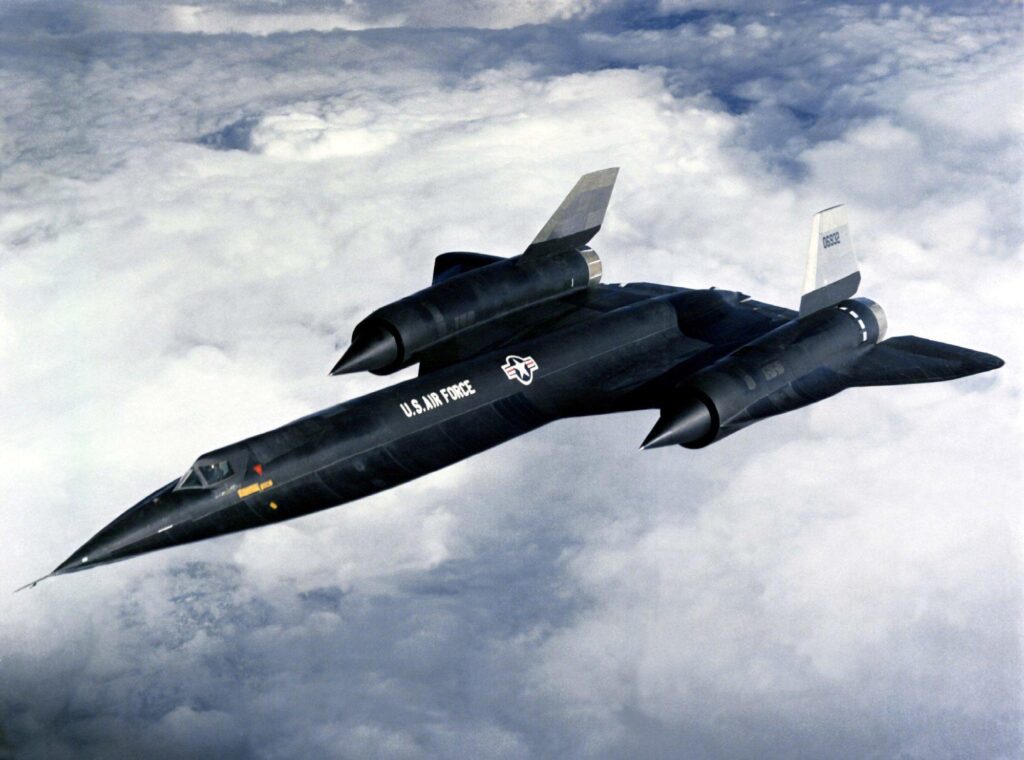
Lockheed SR-71 Blackbird: Engineering the Fastest Jet
AVIATION HISTORY | MILITARY AIRCRAFT | AEROSPACE ENGINEERING


10
The Lockheed SR-71 Blackbird remains one of the most extraordinary achievements in aviation history. Developed during the Cold War, this remarkable aircraft could fly at more than three times the speed of sound, cruise above 80,000 feet, and collect intelligence across enormous distances.
First flown on December 22, 1964, the SR-71 was a masterpiece of engineering that pushed the boundaries of aerodynamics, propulsion, materials science, and high-altitude flight.
More than six decades later, it still holds the official absolute speed record for a crewed air-breathing jet aircraft: 3,529.6 km/h (2,193.2 mph), established on July 28, 1976.
National Air and Space Museum
+1
SR-71 Blackbird: Technical Specifications
Mach 3.2+
Cruising capability
85,000+ ft
Operating altitude
2 × J58
Pratt & Whitney engines
2
Crew members
32.74 m
Length
16.94 m
Wingspan
Specifications are representative of the SR-71A. Published engine-thrust and loaded-weight figures vary by source and configuration.

Air Force Museum
+1
1. The Origins of the Blackbird
During the late 1950s, American military planners needed aircraft capable of gathering intelligence over heavily defended regions.
The Lockheed U-2 reconnaissance aircraft could fly at exceptional altitudes, but increasingly sophisticated radar and surface-to-air missiles threatened its survival. The shootdown of a U-2 over the Soviet Union in May 1960 demonstrated the danger.
Lockheed’s secretive Skunk Works division, led by legendary engineer Clarence “Kelly” Johnson, pursued a new solution: an aircraft that combined extreme altitude, extraordinary speed, and reduced radar visibility.
The result evolved through the A-12 reconnaissance program into the larger, two-seat SR-71. Its development required entirely new approaches to materials, propulsion, and thermal management.
Lockheed Martin
+1
2. Titanium: Surviving Extreme Temperatures
At Mach 3, aerodynamic heating becomes a major structural challenge. The aircraft’s outer surfaces experience intense heating as they compress and interact with the surrounding airflow.
Conventional aluminum alloys were unsuitable for many critical structural areas.
Engineers therefore constructed much of the Blackbird using titanium alloys, which offered exceptional strength and resistance to high temperatures without the weight penalties of heavier alternatives.


The titanium structure introduced its own difficulties. Manufacturing demanded specialized techniques, and the airframe had to accommodate considerable thermal expansion.
One of the Blackbird’s unusual characteristics was that its fuel tanks could leak on the ground. As the aircraft heated during high-speed flight, expansion helped close gaps in the tank structure.
The aircraft was literally engineered to function at temperatures far beyond ordinary flight conditions.
Glenn Research Center
+1
3. The J58 Engine: The Secret Behind Mach 3 Flight
The SR-71 used two Pratt & Whitney J58 afterburning turbojet engines integrated with sophisticated variable-geometry air inlets and exhaust systems.


Unlike a conventional turbojet installation, the SR-71 propulsion system was designed around the behavior of supersonic airflow.
Its distinctive inlet spikes moved to control shock waves and regulate the airflow reaching the engines. At high speeds, compressor bleed air was routed around portions of the engine core into the afterburner.
This produced an integrated propulsion system exhibiting turbo-ramjet characteristics.
At Mach 3.2, the inlet and exhaust ejector accounted for more than 80% of the system’s propulsive force, illustrating just how important inlet compression and nozzle design were to the Blackbird’s performance.
NASA Technical Reports Server
+1
4. Aerodynamics Designed for Speed
The Blackbird’s long, narrow fuselage, sharply swept delta wings, and distinctive chines were not merely stylistic features.
They helped manage airflow and generate lift at supersonic speeds while contributing to the aircraft’s overall aerodynamic efficiency.
The chines — sharp extensions running along the forward fuselage — also influenced the aircraft’s stability and radar signature.
Because the SR-71 operated at extraordinary speed, its aerodynamic design had to balance cruise efficiency, structural loads, thermal effects, and controllability.
5. Reconnaissance at the Edge of Space
Flying above 80,000 feet placed SR-71 crews in an environment where atmospheric pressure and available oxygen were extremely low.
Both crew members wore specialized pressure suits. The pilot operated the aircraft from the front cockpit, while the reconnaissance systems officer managed navigation and intelligence-gathering equipment from the rear.
The Blackbird carried sophisticated sensors that enabled it to survey large areas rapidly.
According to the Smithsonian, the aircraft could examine approximately 100,000 square miles of territory per hour from high altitude.
National Air and Space Museum
Its missions provided intelligence on military installations, infrastructure, and conflict zones during major Cold War events.
6. Why the SR-71 Was So Difficult to Intercept


The Blackbird’s defense depended primarily on three advantages: speed, altitude, and reduced radar visibility.
Its extreme velocity drastically reduced the time available for enemy radar operators and missile batteries to detect, track, and engage it. Meanwhile, its operating altitude complicated interception.
Although the SR-71 was not invisible to radar, its shape and specialized materials incorporated early radar-signature reduction techniques.
The combination was extraordinarily effective. Despite numerous reported missile engagements, no SR-71 was lost to enemy fire during operational missions.
Lockheed Martin
+1
7. World Records That Defined Aviation History
1976
World speed record
3,529.6 km/h (2,193.2 mph) over a measured course, achieved July 28.
1976
Sustained altitude record
25,929 meters (85,069 feet) in horizontal flight, also achieved July 28.
1990
Los Angeles to Washington, D.C.
Approximately 1 hour, 4 minutes, 20 seconds on March 6, during the aircraft’s final flight to the Smithsonian.
These accomplishments established the Blackbird as one of aviation’s most impressive record-setting aircraft.
National Air and Space Museum
+1
8. Retirement and Lasting Legacy
The SR-71’s exceptional capabilities came at an equally exceptional operational cost.
Specialized maintenance, fuel requirements, logistics, and extensive support infrastructure made the aircraft expensive to operate. Advances in satellites and other intelligence systems also changed military reconnaissance priorities.
The US Air Force initially retired the SR-71 in 1990, later briefly returning several aircraft to service before permanently ending the program in 1998. NASA continued using Blackbirds for aeronautical research until 1999.
Air Force Museum
+1
Today, surviving aircraft are preserved in aviation museums, including the Smithsonian’s National Air and Space Museum collection.
Conclusion: An Aircraft Decades Ahead of Its Time
The Lockheed SR-71 Blackbird represents a remarkable convergence of engineering innovations.
Its titanium airframe, integrated propulsion system, advanced aerodynamics, and intelligence-gathering equipment demonstrated what was possible when aerospace engineers were challenged to solve problems far beyond established technological boundaries.
The Blackbird was more than a fast aircraft. It was an engineering achievement that expanded the limits of aviation itself.
Publishing SEO
SEO title
Lockheed SR-71 Blackbird: Engineering the World’s Fastest Jet
Meta description
Discover how the Lockheed SR-71 Blackbird achieved Mach 3+ speeds through titanium engineering, revolutionary J58 engines, and advanced aerodynamics.
Suggested URL slug
lockheed-sr-71-blackbird-engineering-fastest-jet
Focus keyword
SR-71 Blackbird
Secondary keywords
Lockheed SR-71, Blackbird aircraft, fastest jet aircraft, J58 engine, Mach 3 aircraft, Skunk Works, military aviation history
Recommended featured image: SR-71 Blackbird in flight, photographed from above or alongside, highlighting its distinctive black fuselage and engine nacelles.
Authoritative references: NASA Blackbird gallery · Smithsonian aircraft collection · Lockheed Martin history