
Views: 2
BIN3AIAH PLANES • AVIATION HISTORY
Concorde: The Story of Supersonic Passenger Flight
The extraordinary aircraft that crossed the Atlantic at twice the speed of sound and transformed the meaning of luxury air travel.

Aircraft: Aérospatiale–BAC Concorde | Operators: British Airways and Air France | Commercial service: 1976–2003
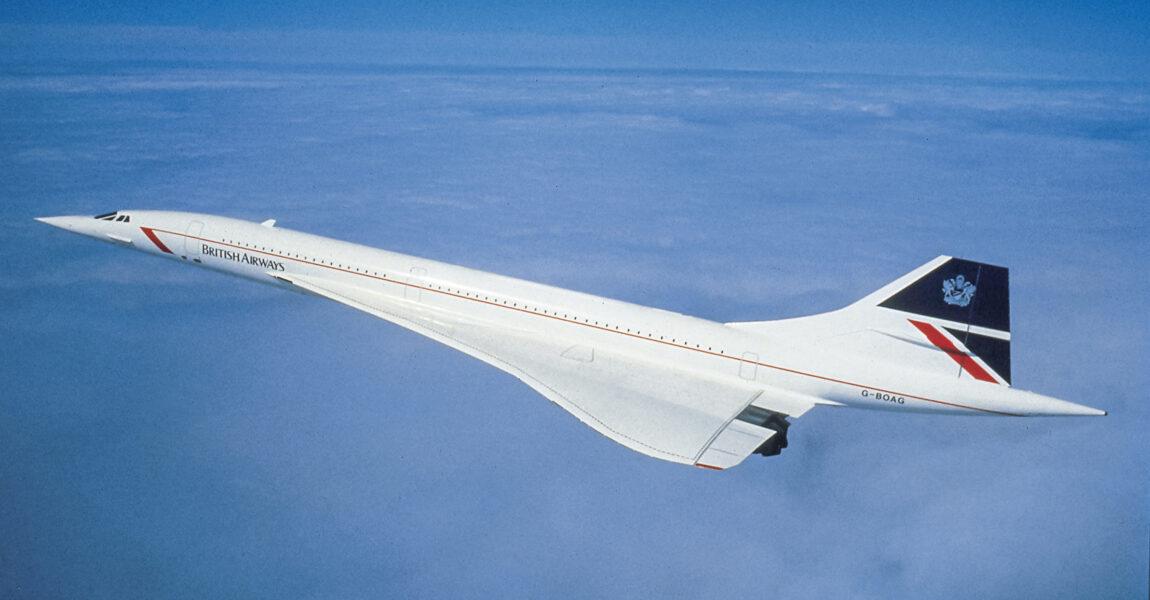
For nearly three decades, Concorde represented one of aviation’s most remarkable achievements. With its needle-shaped nose, elegant delta wings, and four powerful jet engines, it could carry passengers between London and New York in approximately three and a half hours—less than half the time of many conventional airliners of its era.
Concorde was more than a fast aircraft. It was a symbol of technological ambition, international cooperation, prestige, and the belief that the future of travel would be faster than ever.
Although its commercial career ended in 2003, Concorde remains one of the most recognizable aircraft ever built.
1. The birth of a supersonic dream
During the 1950s and 1960s, engineers imagined a new generation of passenger aircraft capable of exceeding the speed of sound.
Britain and France joined forces in 1962 to develop a supersonic transport aircraft. The project became Concorde, a name reflecting the spirit of agreement and cooperation between the two nations.
The French prototype first flew on March 2, 1969, followed by the British prototype on April 9, 1969. Concorde achieved its first supersonic flight on October 1, 1969.
National Museums Scotland
+1


12
The development program pushed engineers to overcome major challenges, including aerodynamic drag, high-temperature flight, fuel efficiency, and flight stability.
Only 20 Concordes were built, including prototypes and development aircraft. Fourteen eventually entered airline service.
2. Concorde technical specifications
Maximum operating speed
Mach 2.04
Cruise altitude
60,000 ft
Passenger capacity
100
Aircraft length
62.1 m
| Specification | Detail |
|---|---|
| Manufacturers | Aérospatiale / BAC |
| Engines | 4 Rolls-Royce/SNECMA Olympus 593 |
| Wingspan | 25.5 m |
| Range | Approximately 6,667 km |
| Maximum takeoff weight | Approximately 185 tonnes |
| Flight crew | 2 pilots and 1 flight engineer |
| First flight | March 2, 1969 |
| Service entry | January 21, 1976 |
Specifications based on British Airways’ published Concorde figures.
British Airways
+1
3. How Concorde flew faster than sound


10
Concorde’s revolutionary design combined several technologies.
Delta wings: The distinctive triangular wing shape helped the aircraft maintain aerodynamic performance at supersonic speeds.
Olympus engines: Four turbojet engines provided tremendous thrust. Reheat, also known as afterburning, supplied additional power during takeoff and acceleration toward supersonic speed.
Droop nose: Concorde’s long nose could be lowered during takeoff and landing, improving pilot visibility. During high-speed cruise, the nose was raised to create a streamlined aerodynamic profile.
Thermal expansion: Friction and compression of air during supersonic flight heated the aircraft’s structure. Concorde’s designers had to account for the resulting expansion of its airframe.
Fuel balancing: Fuel was transferred between tanks to adjust the aircraft’s center of gravity for efficient supersonic flight.
Together, these innovations allowed Concorde to cruise at approximately 2,160 km/h while operating at altitudes above most conventional passenger traffic.
4. The luxury of flying Concorde


9
Concorde offered a unique combination of speed, exclusivity, and premium service.
Its cabin was relatively narrow, and passenger seating was smaller than the spacious business-class suites found in many modern aircraft. However, the experience was defined by what passengers could not find anywhere else: commercial flight at twice the speed of sound.
Passengers enjoyed premium meals, champagne, attentive cabin service, and the excitement of watching the aircraft’s Mach indicator climb beyond Mach 1 and toward Mach 2.
A westbound journey from London to New York could even arrive at an earlier local clock time than its departure, thanks to the difference between time zones.
In 2003, the standard return fare between London and New York was £6,636, making Concorde a privilege available primarily to wealthy travelers and premium business passengers.
National Museums Scotland
+1
5. Concorde’s most important milestones
1962
Britain and France sign the development agreement.
1969
Concorde makes its first flight and later breaks the sound barrier.
1973
Concorde completes its first nonstop Atlantic crossing.
1976
British Airways and Air France launch commercial passenger services.
1977
Scheduled Concorde flights to New York JFK begin.
2000
The Air France Flight 4590 tragedy leads to the grounding of Concorde operations.
2001
Concorde returns to passenger service following safety modifications.
2003
Air France and British Airways end Concorde operations.
6. The tragedy that changed Concorde’s future
On July 25, 2000, Air France Flight 4590 crashed shortly after departing Paris Charles de Gaulle Airport. All 109 people aboard and four people on the ground lost their lives.
The accident prompted major scrutiny of the aircraft’s safety, particularly its tires and fuel tanks. Concorde operations were suspended, and modifications were introduced before passenger service resumed in November 2001.
The crash was a turning point in Concorde’s history. However, its eventual retirement also reflected broader commercial problems, including expensive maintenance, an aging fleet, and weakening demand for premium international travel.
National Museums Scotland
+1
7. Why was Concorde retired?
Despite its technological success, several challenges prevented Concorde from becoming a widespread commercial aircraft.
- High operating costs: Four powerful turbojets consumed significant amounts of fuel.
- Sonic boom restrictions: Supersonic flight over populated land areas was heavily restricted, limiting commercially attractive routes.
- Small passenger capacity: Approximately 100 seats made it difficult to spread operating costs across large passenger numbers.
- Expensive maintenance: Specialized systems and an aging fleet required extensive engineering support.
- Changing market conditions: The aviation downturn following September 11, 2001, further weakened demand.
Air France ended its Concorde service in May 2003, and British Airways operated its final scheduled Concorde flight on October 24, 2003.
Science Museum Group Collection
+2
8. Concorde’s lasting legacy


Today, preserved Concorde aircraft can be admired at museums around the world, including the Intrepid Museum in New York, the National Museum of Flight in Scotland, and the Smithsonian National Air and Space Museum’s Steven F. Udvar-Hazy Center in Virginia.
Concorde’s significance extends far beyond speed. Its development helped demonstrate how advanced aerodynamics, propulsion, and international engineering cooperation could produce aircraft that once seemed impossible.
Concorde also showed why technological achievement does not always translate into commercial success.
9. Could supersonic passenger flight return?

Supersonic flight continues to attract attention from aerospace engineers, researchers, and aircraft manufacturers.
NASA’s X-59 experimental aircraft is exploring how future supersonic airplanes could reduce the disruptive sonic boom associated with flight faster than sound.
The X-59 achieved its first supersonic flight on June 5, 2026, and NASA reported another successful high-altitude test flight on October 21, 2026, reaching Mach 1.4.
NASA
+1
These advances are encouraging, but major challenges remain: aircraft noise, fuel consumption, emissions, certification, and economic viability.
Concorde’s successors will need to deliver more than extraordinary speed. They must make supersonic transportation practical, efficient, and sustainable.
10. Watch Concorde in action

Concorde Air France: They Made the Legend Fly
Official Air France documentary released January 21, 2026, featuring historical accounts and rare aircraft access.
Official documentary information

Concorde’s Final Flight — Archive Documentary
Historical television documentary examining the aircraft’s final commercial flights.

Concorde in Flight — British Airways
Historic footage in the British Airways media archive, with restrictions on downloading and reuse.
View the aviation footage archive
Conclusion
Concorde remains one of the greatest symbols of the jet age.
For 27 years, it demonstrated that passengers could cross oceans at twice the speed of sound while experiencing a level of exclusivity associated with the world’s finest luxury services.
Its story is one of remarkable innovation, national ambition, commercial limitations, and enduring fascination.
The next generation of supersonic aircraft may eventually surpass Concorde in efficiency, comfort, and practicality. But few aircraft will ever match the excitement inspired by the slender white jet that made the Atlantic Ocean feel smaller.
WordPress SEO publishing package
Article details
Ready for editorial review
Suggested post ID
PLANES-CONCORDE-001
SEO title
Concorde: History, Speed, Luxury & Supersonic Flight
URL slug
concorde-supersonic-passenger-flight-history
Meta description
Explore Concorde’s history, Mach 2 speed, groundbreaking engineering, luxury cabins, famous flights and retirement in this complete aviation guide.
Focus keyword
Concorde supersonic passenger flight
Suggested category
Aviation History / Supersonic Aircraft
Suggested tags
Concorde, Supersonic Flight, British Airways, Air France, Aviation History, Mach 2, Aircraft Engineering
Suggested featured image: A full side-profile photograph of Concorde in flight, ideally from an official airline archive or a photographer who permits reuse. Suggested alt text: British Airways Concorde supersonic passenger aircraft flying at high altitude.
Media requirements: The article includes gallery references and three video resources. The displayed reference images are not confirmed as licensed for WordPress republication. Verify permissions and credits before uploading; link to or embed official videos where permitted.
Principal references: British Airways Concorde history, National Museums Scotland, Smithsonian Air and Space Museum, and NASA X-59 research.
Publishing status: Article prepared for planes.bin3aiah.net. It has not been uploaded or published to WordPress.