
Views: 0
BIN3AIAH PLANES | AVIATION HISTORY & TECHNOLOGY
The History and Future of Supersonic Aviation
From breaking the sound barrier to the next generation of ultra-fast passenger aircraft.


6
For decades, the dream of flying faster than the speed of sound has captivated engineers, pilots, and travelers. What began as an experimental military achievement eventually transformed commercial aviation through the legendary Concorde.
Yet supersonic passenger travel disappeared in 2003, leaving an important question: Why did aviation abandon one of its most remarkable technological achievements?
Today, advances in aerodynamics, engine technology, materials, and noise reduction are bringing that dream back into focus. Projects including NASA’s X-59 and Boom Supersonic’s Overture could help define a new chapter of high-speed flight.
1. What is supersonic aviation?
Supersonic aviation refers to aircraft flying faster than the local speed of sound, expressed as Mach 1.
The speed of sound changes with air temperature and altitude. Near sea level, it is approximately 1,235 km/h, while at typical high-altitude cruising conditions it is lower.
| Speed category | Mach number |
|---|---|
| Subsonic | Below Mach 1 |
| Transonic | Around Mach 1 |
| Supersonic | Mach 1–5 |
| Hypersonic | Above Mach 5 |
As an aircraft exceeds Mach 1, its pressure disturbances form shock waves. When these waves reach observers on the ground, they can produce the distinctive sound known as a sonic boom.
This phenomenon has been one of the biggest obstacles to widespread civilian supersonic travel.
2. The beginning: Breaking the sound barrier in 1947

On October 14, 1947, American test pilot Chuck Yeager became the first person officially recorded flying faster than sound in level flight, piloting the rocket-powered Bell X-1.
The aircraft, nicknamed Glamorous Glennis, reached approximately Mach 1.06 during its historic flight above California’s Mojave Desert.
This achievement demonstrated that controlled supersonic flight was possible, paving the way for a new generation of aircraft.
Throughout the 1950s and 1960s, supersonic technology rapidly developed in military aviation, leading to aircraft including the North American F-100 Super Sabre, Lockheed F-104 Starfighter, and Soviet MiG-21.
3. The golden age: Concorde and the supersonic dream

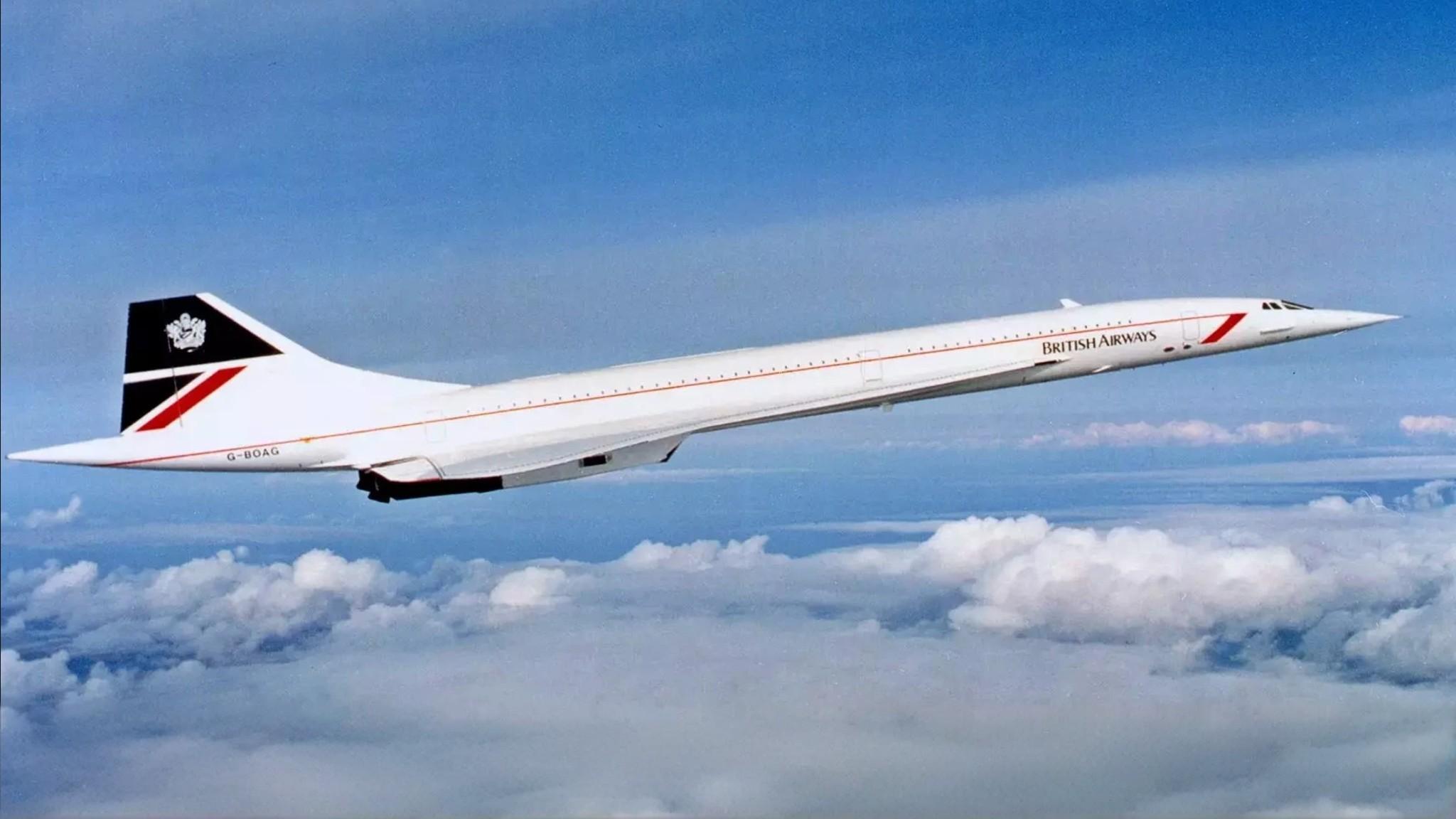
Perhaps no aircraft better symbolizes supersonic aviation than the Aérospatiale/BAC Concorde.
Developed jointly by Britain and France under an agreement signed in 1962, Concorde represented one of the most ambitious international aerospace collaborations of its era.
Its first flight took place on March 2, 1969, and commercial services began on January 21, 1976.
Cruising speed
Mach 2.02
Approximately 2,150 km/h
Cruising altitude
60,000 ft
Approximately 18,300 metres
Passenger capacity
~100
Typical configuration
Transatlantic flight
Under 4h
London–New York service
Concorde’s distinctive delta wings, slender fuselage, drooping nose, and four Rolls-Royce/Snecma Olympus engines made it immediately recognizable.
Passengers could travel between London and New York in roughly half the time required by conventional airliners.
Although Concorde was a technological triumph, its high fuel consumption, limited passenger capacity, expensive tickets, maintenance costs, and sonic-boom restrictions prevented mass-market adoption. Only 14 production aircraft entered airline service.
Smithsonian Institution
+1
4. The Soviet competitor: Tupolev Tu-144

While Concorde became the most famous supersonic airliner, the Soviet Union developed its own competitor, the Tupolev Tu-144.
The Tu-144 first flew on December 31, 1968, several months before Concorde. It became the first supersonic transport aircraft to take flight.
Despite its impressive performance, the program faced engineering difficulties, reliability issues, and high operating costs. Its scheduled passenger service lasted only from 1977 to 1978.
The short commercial life of the Tu-144 illustrated how difficult it was to convert extraordinary aerospace technology into sustainable airline operations.
5. Why did supersonic passenger travel disappear?
Concorde’s retirement in 2003 marked the end of regularly scheduled supersonic passenger services.
Several factors contributed to this outcome:
- Operating economics: Supersonic aircraft consumed considerably more fuel per passenger than conventional airliners.
- Sonic booms: Restrictions on flights over populated land significantly limited viable routes.
- Limited passenger demand: Ticket prices made the service inaccessible to most travelers.
- Ageing aircraft: Maintaining a small, complex fleet became increasingly expensive.
- Safety and confidence: The fatal Air France Flight 4590 accident in July 2000 was followed by a lengthy grounding and contributed to the program’s difficulties.
The Smithsonian describes Concorde as an extraordinary technological accomplishment ultimately constrained by economics and a limited market.
National Air and Space Museum
+1
6. The return of supersonic aviation
After more than two decades without scheduled supersonic passenger flights, aviation companies and research organizations are making significant progress toward a new generation of faster aircraft.
Two projects stand out.

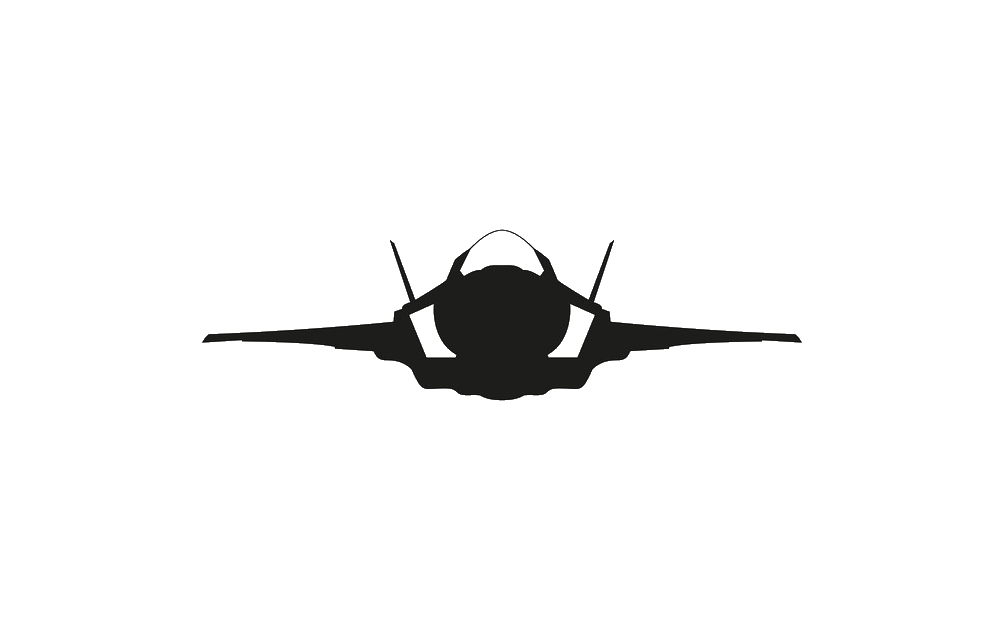
NASA X-59 — Quiet Supersonic Research
Developed with Lockheed Martin, the X-59 is designed to reduce the loud sonic boom into a quieter sound. It is an experimental aircraft, not a passenger airliner.

Boom Overture — Commercial Supersonic Travel
Boom’s planned airliner targets approximately Mach 1.7, with an emphasis on faster long-distance passenger travel and improved operating economics.
NASA’s X-59 reaches a milestone in 2026

On June 5, 2026, NASA’s X-59 exceeded the speed of sound for the first time, reaching approximately Mach 1.1 at an altitude of 43,400 feet.
Its unusual long nose and carefully shaped airframe are designed to control how shock waves form and travel through the atmosphere.
The objective is not simply to fly faster, but to make supersonic flight quieter for people on the ground.
As of October 2026, NASA is continuing its flight-test campaign. On October 21, NASA pilot Mike Lippert completed his first X-59 flight, another step in the aircraft’s research program.
NASA
+2
Boom XB-1: A commercial-development breakthrough

On January 28, 2025, Boom Supersonic’s XB-1 demonstrator reached Mach 1.122 during a test flight over California’s Mojave Desert.
The test demonstrated important technology relevant to Boom’s proposed Overture airliner. The XB-1 subsequently completed its flight-test program and was retired in February 2025.
Boom also reported tests involving Mach cutoff, a technique that uses atmospheric conditions and flight parameters to prevent a sonic boom from reaching the ground. Such techniques still need to be translated into certified, practical airline operations.
Boom Supersonic
+1
7. Future aircraft: How fast could we travel?
Comparison of aircraft cruising speeds
Approximate or proposed cruising speeds in km/h. Overture is a design target, not an operational aircraft.
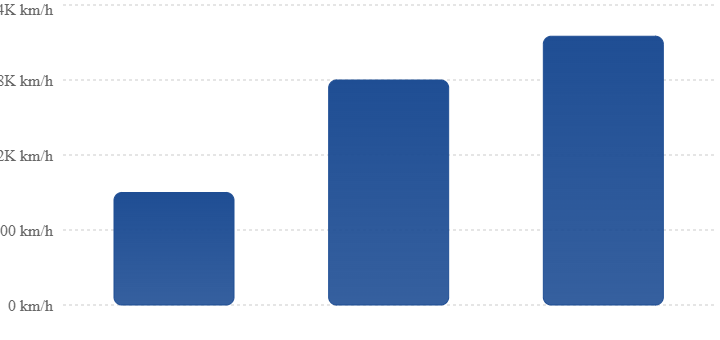
Future supersonic aircraft could make some intercontinental journeys substantially shorter.
For example, a trip traditionally requiring seven to eight hours might become possible in approximately four to five hours, depending on aircraft capabilities, routing, winds, airport procedures, and operational restrictions.
However, faster flying does not automatically translate into proportional reductions in total travel time.
8. Challenges facing the next generation
Despite the excitement surrounding supersonic aviation, several major challenges remain.
Noise regulations: Airports and communities require acceptable noise levels. In June 2026, the US Federal Aviation Administration proposed replacing the longstanding prohibition on routine civilian supersonic operations over land with performance-based noise standards. The proposal does not itself establish unrestricted supersonic operations.
Federal Aviation Administration
+1
Fuel efficiency and climate impact: Supersonic flight demands substantial energy. New propulsion technologies, more efficient designs, and lower-carbon fuels may improve environmental performance, but their overall benefits must be demonstrated.
Aircraft economics: Manufacturers must balance development costs, maintenance, passenger capacity, ticket prices, and airline profitability.
Certification and safety: New aircraft require extensive testing and regulatory approval before carrying paying passengers.
9. Will supersonic aviation become mainstream?
The future of supersonic aviation will likely develop gradually.
Initial commercial services, if certified and launched, may concentrate on premium passengers and routes where saving several hours provides significant value.
As technology matures, quieter flight, improved fuel efficiency, and more affordable manufacturing could expand the market.
One possibility is that supersonic travel becomes an additional category of aviation, serving selected long-distance routes rather than replacing conventional airliners.
Beyond that, research into hypersonic propulsion could eventually open further possibilities, although routine hypersonic passenger flights remain a much more distant prospect.
10. Conclusion: A new era of speed
The history of supersonic aviation tells a remarkable story of engineering ambition, technological achievement, and commercial reality.
From Chuck Yeager’s Bell X-1 to Concorde’s groundbreaking transatlantic operations, humanity proved that traveling faster than sound was possible.
Now the industry is attempting something more difficult: making high-speed aviation quieter, more efficient, economically sustainable, and accessible to a broader passenger market.
Whether the next generation succeeds will depend not only on speed, but on solving the problems that brought Concorde’s era to an end.
The future of aviation may not simply be about flying farther. It may be about reaching the world faster, without compromising the communities and environment below.
Suggested videos for the article
NASA X-59 Quesst MissionAircraft development, flight testing and quiet supersonic technology.
Find video
Boom XB-1 First Supersonic FlightFootage and reports from the January 2025 supersonic milestone.
Find video
Concorde — History and Final FlightsArchival footage of Concorde operations and its farewell in 2003.
Find video
These are video search links, not preverified embeddable videos. The photographs above are visual references; confirm reproduction rights before publishing them.
WordPress SEO publishing package
ARTICLE TITLE
The History and Future of Supersonic Aviation
RECOMMENDED SLUG
history-future-supersonic-aviation
META DESCRIPTION
Explore the history of supersonic aviation, from the Bell X-1 and Concorde to NASA’s X-59, Boom Overture, and the future of faster air travel.
Copy
SEO DETAILS
Focus keyword: History of supersonic aviation
Category: Aviation History / Aviation Technology
Tags: Supersonic Aviation, Concorde, Bell X-1, NASA X-59, Boom Supersonic, Overture, Sonic Boom, Aviation Future
Suggested website: planes.bin3aiah.net
Information updated: October 24, 2026
Primary reference sources
- NASA — First Generation X-1
- Smithsonian — Concorde
- NASA — Quesst Mission
- Boom Supersonic — XB-1 Flight
- FAA — Supersonic Flight
Publication status: Article prepared in this chat; not published to WordPress.