


Views: 0
Boeing B-52 Stratofortress: Engineering a Long-Serving Bomber
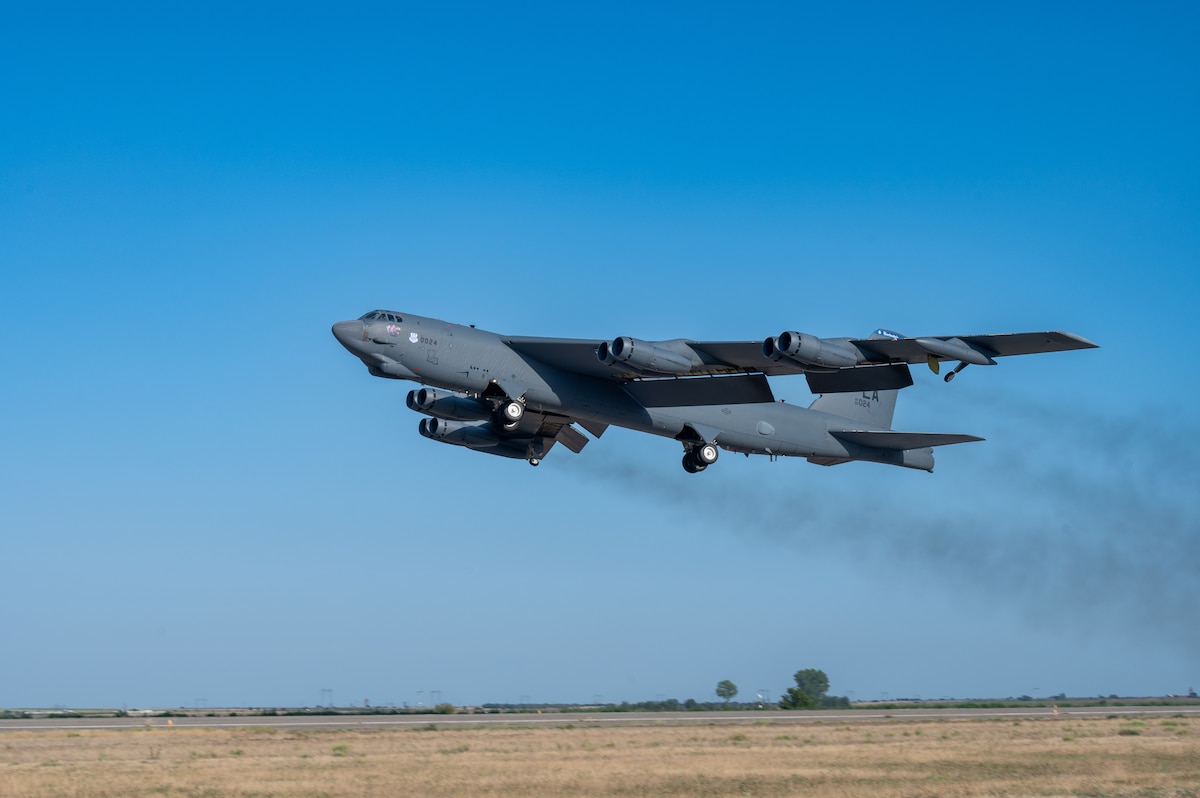
The Boeing B-52 Stratofortress is one of the longest-serving military aircraft in aviation history. Designed during the early Cold War, this eight-engine strategic bomber entered United States Air Force service in 1955 and continues to play an important role in long-range military aviation.
Although its original design dates back to the 1940s, the B-52 remains operational because of its remarkable combination of structural durability, long-range performance, heavy payload capacity, and ability to accommodate modern technology.
The aircraft represents an unusual engineering achievement: a military platform developed for one technological era that has successfully adapted to several generations of aviation systems.
The Origins of the B-52 Stratofortress
The B-52 emerged from the United States Air Force’s requirement for a strategic bomber capable of transporting heavy payloads over intercontinental distances.
Boeing explored several design configurations before developing the swept-wing, jet-powered aircraft that became the Stratofortress.
The XB-52 prototype completed its first flight on April 15, 1952. The B-52B entered operational service in 1955, beginning a military career that would extend across multiple generations.
A total of 744 B-52 aircraft were manufactured across several variants. The final production version, the B-52H, remains the variant used by the U.S. Air Force.
Engineering the Massive Airframe
One of the B-52’s most recognizable characteristics is its enormous wingspan of approximately 56.4 meters.
The aircraft uses swept wings to support high-subsonic flight, while its long fuselage provides space for fuel, crew equipment, mission systems, and an internal weapons bay.
Unlike smaller aircraft designed primarily for maneuverability, the B-52 was optimized for carrying substantial loads over great distances.
Flexible Wings and Structural Strength
The B-52’s wings are remarkably flexible. During flight, aerodynamic forces cause them to bend upward, while their position changes when the aircraft is stationary.
This flexibility allows the structure to respond to varying aerodynamic loads rather than behaving like a completely rigid beam.
Combined with ongoing structural inspections and maintenance, the design has helped the aircraft remain serviceable for decades.
Unusual Landing-Gear Engineering
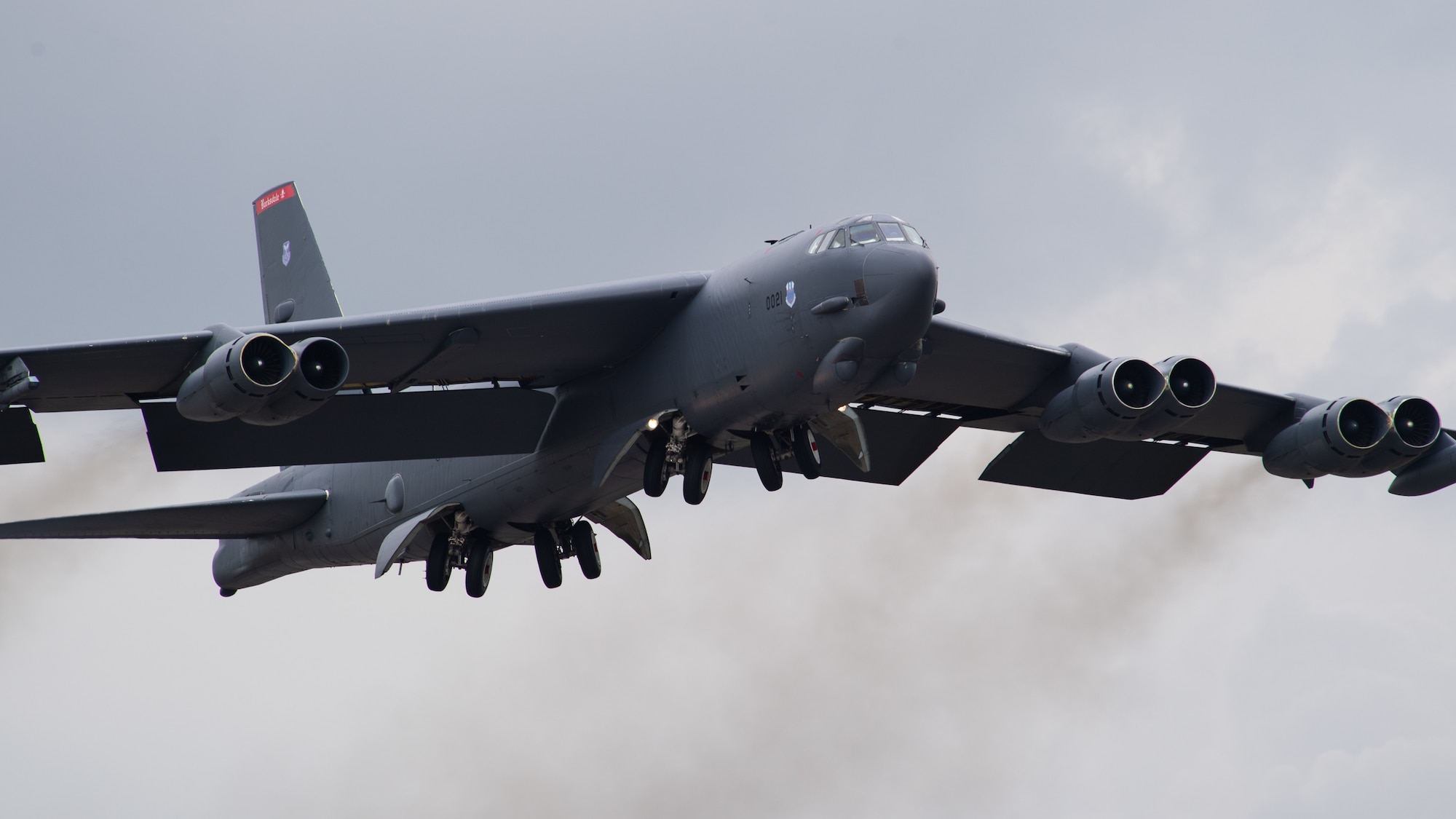
Unlike most large airplanes, the B-52 uses a bicycle-style main landing-gear arrangement.
Four main landing-gear assemblies are positioned beneath the fuselage, while smaller outrigger wheels support the outer wings during ground operations.
The main landing gear can also be oriented for crosswind landings, allowing the aircraft to approach a runway while maintaining an appropriate alignment with the wind.

Eight Engines: The Power Behind the Stratofortress
The B-52H is powered by eight Pratt & Whitney TF33 turbofan engines arranged in four twin-engine pods beneath its wings.
Each engine produces up to approximately 17,000 pounds of thrust, providing the power required for the aircraft’s heavy takeoff weight and long-distance missions.
The eight-engine configuration is one of the B-52’s defining visual and technical characteristics.
While these engines have served for decades, improvements in propulsion technology have created opportunities for greater reliability, maintainability, and efficiency.
Boeing B-52H Technical Specifications
| Specification | B-52H |
|---|---|
| Manufacturer | Boeing |
| First prototype flight | April 15, 1952 |
| Service entry | 1955 |
| Engines | 8 Pratt & Whitney TF33 turbofans |
| Wingspan | 56.4 m |
| Length | 48.5 m |
| Height | 12.4 m |
| Maximum takeoff weight | 488,000 lb |
| Maximum payload | 70,000 lb |
| Maximum speed | Approximately 650 mph |
| Unrefueled range | Approximately 8,800 miles |
| Service ceiling | 50,000 ft |
| Crew | 5 |
Figures represent published B-52H characteristics. Actual mission performance depends on aircraft configuration, payload, and operating conditions.
Long-Range Flight and Aerial Refueling
The B-52’s large fuel capacity enables it to perform long-distance missions without requiring frequent landings.
Its published unrefueled range is approximately 8,800 miles, although operational range varies with mission conditions.
The aircraft can also receive fuel during flight from aerial refueling tankers, extending its operational endurance considerably.
This capability enables the B-52 to participate in long-distance deployments and strategic missions far from its home airbase.
Weapons Capacity and Mission Flexibility
The B-52 was originally developed primarily for strategic nuclear deterrence, but its operational role expanded significantly over time.
Modern configurations can carry a variety of conventional and nuclear weapons, including precision-guided bombs and air-launched missiles.
Its substantial payload capacity allows the aircraft to support different mission requirements without major changes to the fundamental airframe.
During the 1991 Gulf War, B-52 aircraft demonstrated their ability to support large-scale conventional operations. The aircraft subsequently participated in additional military campaigns and long-range deployments.
However, the B-52 is not a stealth bomber. Its size and radar signature limit its suitability for penetrating heavily defended airspace. Long-range weapons and coordinated mission planning help address this limitation.
Modernization: From B-52H to B-52J
One of the most important developments in the Stratofortress program is the ongoing modernization effort associated with the future B-52J configuration.
The U.S. Air Force is pursuing major improvements to propulsion, radar, communications, cockpit equipment, and supporting aircraft systems.
Rolls-Royce F130 Engine Replacement
The Commercial Engine Replacement Program will replace the aircraft’s eight TF33 engines with eight modern Rolls-Royce F130 engines.
The modernization is intended to improve engine reliability, reduce maintenance demands, and support continued operation over the coming decades.
The program also requires changes to engine nacelles, electrical systems, cockpit equipment, and other supporting components.
Modern Radar and Avionics
The Radar Modernization Program will replace the B-52’s older APQ-166 radar with a modern APQ-188 active electronically scanned array radar.
The upgrade is designed to improve radar reliability, navigation, and mission capabilities.
In June 2026, the engine replacement program received approval to enter engineering and manufacturing development. In August 2026, the radar modernization program received authorization to begin low-rate initial production.
These milestones represent substantial progress, but they do not mean the entire B-52 fleet has already been upgraded to B-52J standards.
Why Has the B-52 Survived for More Than 70 Years?
Several characteristics explain the aircraft’s extraordinary operational longevity:
- Durable airframe: Its large structure has supported extensive service and continued inspections.
- High payload capacity: The aircraft remains capable of carrying substantial mission equipment and weapons.
- Long operational range: Its fuel capacity and aerial refueling compatibility enable extended missions.
- Upgradable systems: Avionics, communications, radar, and propulsion can be modernized.
- Operational flexibility: The aircraft has adapted to changing strategic requirements.
- Established support infrastructure: Maintenance expertise and logistics systems have evolved with the aircraft.
Nevertheless, sustaining an aging bomber presents important engineering challenges, particularly in structural inspections, replacement-part availability, and the integration of modern technology with older systems.
The Future of the Stratofortress
The U.S. Air Force intends to retain the B-52 as an important long-range bomber for decades to come.
Modernization efforts are designed to support operations into the 2050s and potentially beyond.
If these plans are realized, the Stratofortress could achieve a service life approaching or exceeding 100 years, an exceptional milestone in military aviation.
Conclusion
The Boeing B-52 Stratofortress is more than a historic Cold War bomber. It is a remarkable example of how aircraft engineering, adaptable design, and continuous technological improvement can extend the useful life of a complex machine.
Its eight engines, flexible swept wings, distinctive landing gear, enormous payload capacity, and long-range capabilities have helped make it one of aviation’s most recognizable aircraft.
With the B-52J modernization program progressing, the Stratofortress continues to demonstrate that a successful aircraft design can remain relevant long after its original technological generation has passed.
References and Further Reading
- U.S. Air Force Global Strike Command — B-52 Stratofortress Fact Sheet
- Boeing — B-52 Aircraft Specifications and Program History
- U.S. Air Force — B-52 Engine and Radar Modernization Milestones, 2026
- Air Force Materiel Command — B-52 Engine Replacement Program
Image credits: U.S. Air Force / U.S. Department of Defense. Article prepared for Bin3aiah Planes.