
Views: 0
F-35 Lightning II: How Its Technology Works
AVIATION TECHNOLOGY | FIFTH-GENERATION FIGHTER AIRCRAFT


8
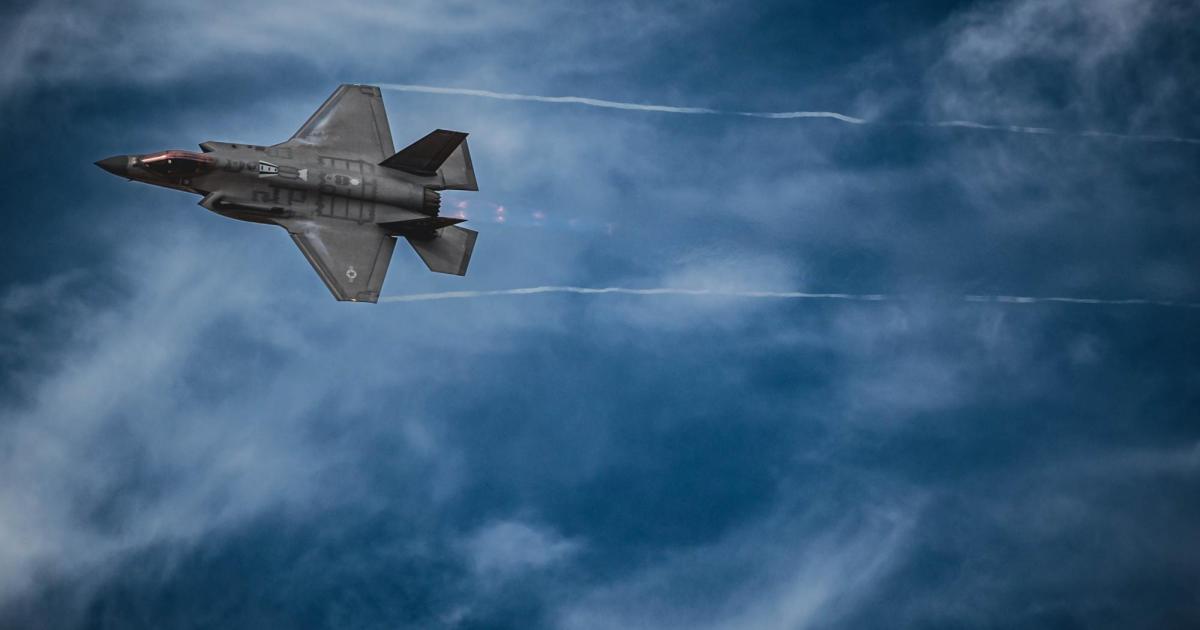
The Lockheed Martin F-35 Lightning II is one of the most technologically sophisticated combat aircraft ever developed. Built around stealth, advanced sensors, powerful computing systems and networked communications, it represents a major shift in how modern fighter jets operate.
Unlike traditional fighters that emphasize speed and maneuverability, the F-35 is designed to combine information from multiple systems, detect threats, and provide pilots with a clearer understanding of their surroundings.
Its greatest advantage is not any single component. It is how its technologies work together.
1. Stealth: How the F-35 Reduces Radar Detection

Stealth technology makes the F-35 more difficult for enemy radar systems to detect and track.
Its low-observable design combines several engineering techniques:
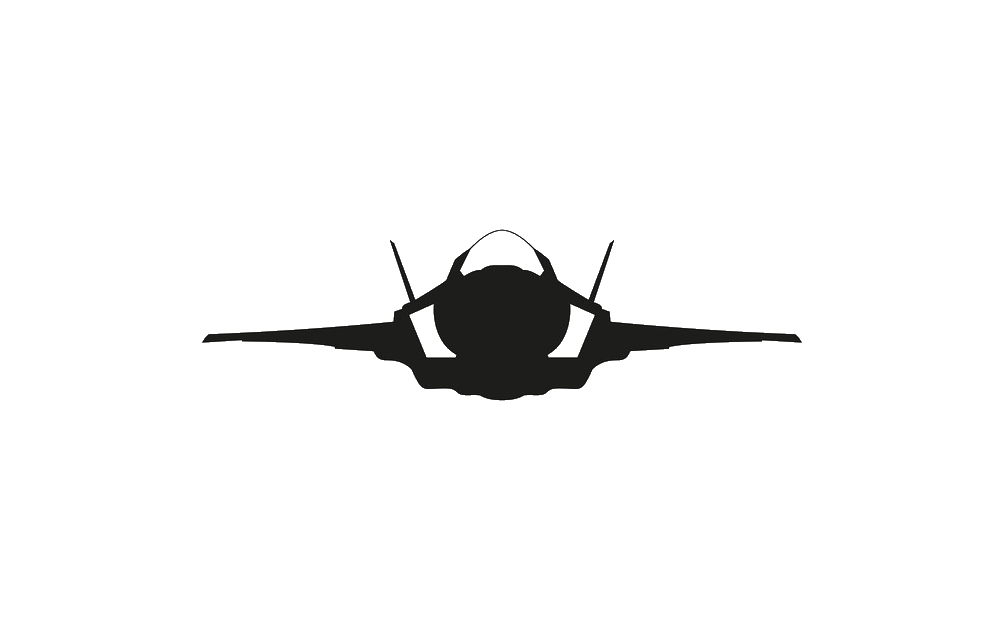
- Carefully shaped surfaces: Wings, fuselage edges and control surfaces are arranged to reduce radar reflections back toward a radar receiver.
- Radar-absorbing materials: Specialized materials and coatings help reduce reflected radar energy.
- Internal weapons bays: The aircraft can carry weapons inside its fuselage rather than externally, preserving its low-observable profile.
- Integrated design: Air intakes, sensors and other aircraft components are designed to limit radar signatures.
Stealth does not make the aircraft invisible. Radar frequency, viewing angle, distance, environmental conditions and external equipment can all influence detectability.
2. Sensor Fusion: The Aircraft’s Digital Brain

One of the F-35’s defining innovations is sensor fusion.
Older fighter aircraft frequently present radar contacts, electronic warnings and other sensor readings separately, leaving pilots to interpret and combine them.
The F-35’s integrated mission computers process information from multiple sources and assemble a consolidated tactical picture.
Simplified sensor-fusion process
RadarRadio-frequency detection
InfraredThermal imagery
Electronic warfareSignal awareness
Integrated mission processing
Correlates, analyzes and prioritizes incoming information
Unified pilot display
Combined tracks, warnings and navigation information
This processing reduces the workload involved in interpreting raw sensor data. It also helps the aircraft exchange relevant information with other friendly platforms.
Lockheed Martin
+1
3. AESA Radar: Electronic Scanning Without Moving the Antenna
The F-35’s AN/APG-81 Active Electronically Scanned Array (AESA) radar uses numerous electronically controlled transmit/receive elements.
Instead of mechanically rotating a large radar antenna to redirect its beam, the system changes the phase relationships of emitted signals to steer the beam electronically.
This enables rapid scanning and flexible radar operation for detecting, tracking and mapping targets.
The radar is integrated with other onboard sensors, rather than functioning as an isolated instrument.
4. Distributed Aperture System: Seeing Around the Aircraft

The F-35’s Distributed Aperture System (DAS) uses six infrared sensors positioned around the airframe.
Together, these provide nearly spherical infrared coverage and support:
- Missile launch detection and warning.
- Awareness of nearby aircraft and other heat-emitting objects.
- Nighttime situational awareness.
- Infrared imagery for navigation and targeting support.
The system processes imagery so that pilots can see portions of the outside environment that would normally be obstructed by the aircraft’s structure.
Joint Strike Fighter
+1
5. Helmet-Mounted Display: Replacing the Traditional HUD
The F-35 replaces the conventional fixed head-up display with a sophisticated Helmet-Mounted Display System.
Information appears directly on the helmet visor, including flight data, navigation information, sensor imagery and tactical cues.
When the pilot looks down or to the side, selected images from the distributed cameras can appear aligned with the pilot’s field of view.
The effect resembles looking through the aircraft, although the view is electronically generated from cameras rather than actual transparency.
6. Electro-Optical Targeting System: Detecting Heat and Images
The Electro-Optical Targeting System (EOTS) is integrated into the lower fuselage behind a specially designed window.
It provides infrared imaging and targeting functions without requiring a large external targeting pod.
Its publicly described capabilities include infrared search and tracking, laser designation, rangefinding and support for precision-guided weapons.
By placing this equipment inside the aircraft’s aerodynamic contours, designers reduce external drag and protect low-observable characteristics.
Lockheed Martin
+1
7. F135 Engine: Powering a Supersonic Fighter

The F-35 uses a single Pratt & Whitney F135 afterburning turbofan engine.
The engine compresses incoming air, mixes it with fuel, burns the mixture, and expands hot gases through turbines and the exhaust nozzle to generate thrust.
For the F-35A, publicly reported specifications include:
43,000
Pounds of thrust
Mach 1.6
Maximum speed
50,000+ ft
Service ceiling
1,350+ mi
Internal-fuel range
Indicative F-35A figures published by the U.S. Air Force; operating conditions and aircraft configurations affect performance.
U.S. Air Force
+1
8. Three Variants, Three Different Missions

F-35A — Conventional Takeoff and Landing
Designed primarily for conventional air bases. It is the lightest variant and is capable of high-g maneuvering.
F-35B — Short Takeoff and Vertical Landing
Uses a shaft-driven lift fan, swiveling exhaust nozzle and roll-control ducts to support short takeoffs and vertical landings.

F-35C — Aircraft Carrier Operations
Has larger wings, reinforced landing gear and carrier arresting equipment for catapult launches and arrested landings.
9. Electronic Warfare and Network Connectivity
Beyond conventional radar detection, the F-35 incorporates an electronic warfare system that helps detect and characterize electromagnetic signals.
Its avionics also support secure tactical data sharing, allowing aircraft to exchange information with other participating military platforms.
This makes the F-35 useful not only as a fighter but also as an airborne sensor and information-sharing platform.
10. Technology Refresh 3 and Block 4 Modernization
The aircraft’s technological development continues through software and hardware upgrades.
Technology Refresh 3 (TR-3) introduces improved computing and memory capabilities intended to support future Block 4 improvements.
However, development has not been straightforward. The U.S. Government Accountability Office reported in September 2025 that TR-3 and Block 4 were experiencing significant delays, software challenges and cost increases. The agency projected completion of a reduced Block 4 scope in 2031 at the earliest.
GAO Files
+1
This illustrates one of the central challenges of modern fighter development: sophisticated integrated electronics require extensive software testing, reliable cooling, electrical power and long-term maintenance support.
Conclusion
The F-35 Lightning II demonstrates how combat aviation has evolved from primarily aerodynamic engineering into an integration of stealth design, high-performance propulsion, software, infrared systems and networked communications.
Its significance lies in bringing these technologies together within one aircraft. The result is a fighter designed to improve pilot awareness, reduce workload and support coordinated operations, although complexity, reliability, cost and modernization remain important engineering challenges.
The F-35 is not simply a supersonic aircraft equipped with advanced electronics. It is an integrated flying information system designed around the pilot and the wider mission.
Recommended SEO details for Bin3aiah Planes
SEO title: F-35 Lightning II Technology Explained: Stealth, Radar, Engine & Sensors
Meta description: Discover how the F-35 Lightning II works, from stealth technology and AESA radar to sensor fusion, pilot helmets, the F135 engine and its three variants.
Suggested URL slug: f-35-lightning-ii-technology-explained
Primary keyword: F-35 Lightning II technology
Image guidance: Use licensed or officially released F-35 images with descriptive alt text and proper attribution.